For language training providers across Canada, learning technology is no longer an optional enhancement. Digital skills have become essential settlement skills.
The Immigrant Education Society (TIES) in Calgary has emerged as a leader in integrating digital literacy into Language Instruction for Newcomers to Canada (LINC) programming. Through innovative use of Avenue, smart classroom technologies, hybrid delivery models, and specialized literacy programming, TIES is helping newcomers build the language and digital skills they need to thrive in Canada.
Avenue Canada is pleased to launch More Than Language: The TIES Approach to Newcomer Success, a 12-minute video profile of TIES. Through interviews with TIES program leaders and practitioners, the video shows how digital skills are treated as essential settlement skills; how Avenue supports classroom and independent learning, assessment, and course customization; how the Avenue Technology Standards help guide program design; and how hybrid delivery, literacy supports, and integrated settlement services help TIES respond to diverse learner needs.
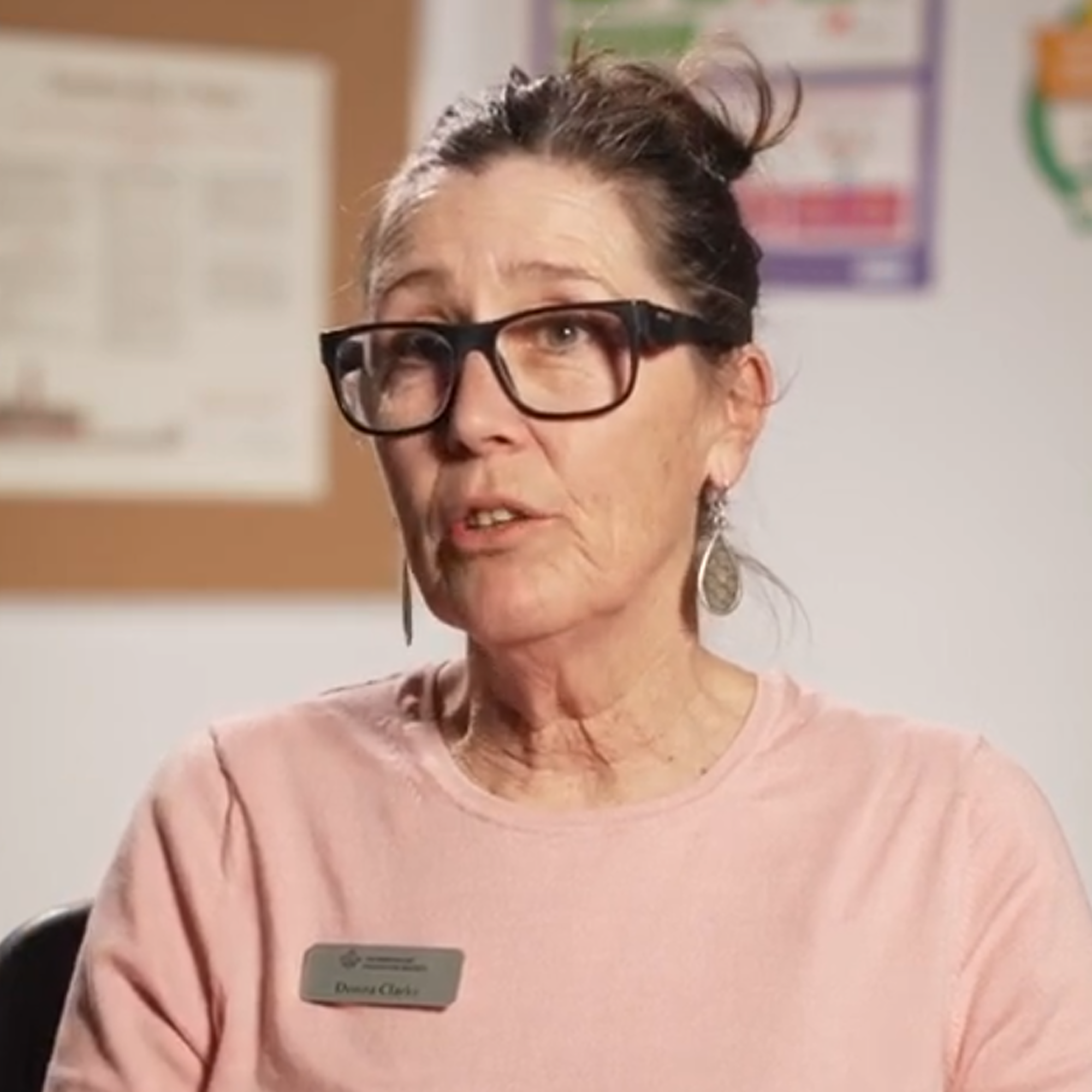
In preparation for both this interview and the video profile, our production team spoke with members of the TIES team, including Jana Ciobanu, Kerry Howard, Donna Clarke, Jeremy Wilson, and Noha El Tanahi, about their approach to newcomer settlement, digital inclusion, and the role Avenue plays in their work.
Generative AI was used to help transform a rough research transcript into a polished interview-style article. It helped organize themes, create interview questions, condense and edit long responses, improve readability, and shape the material into a coherent narrative. The draft was based on the original transcript and was intended to preserve the interviewees’ meaning, perspective, and examples while presenting them in a more concise and publication-ready format.
For those unfamiliar with TIES, can you tell us about your organization and the role it plays in newcomer settlement?
TIES has been serving newcomers and low-income Calgarians since 1988. While many people know us primarily for language training, we’ve grown into much more than that.
Today, we offer over 50 programs that support newcomers through every stage of settlement. Language training remains a core service, but we also provide employment programs, settlement support, mental health services, childcare, community research, and financial literacy programming.
Our goal is to make TIES a true community hub. When newcomers come to us, they’re not accessing just one service. They’re accessing an entire network of support that helps them build successful lives in Canada.
Language learning is often the entry point, but it’s connected to everything else.
A learner might come to class and then discover they need help renewing a PR card, finding housing, preparing a resume, filing taxes, or accessing mental health supports. Because all those services are available within the same organization, we can help them immediately.
That integrated approach reduces what we call “transition fatigue.” Newcomers don’t have to navigate multiple organizations across the city. They can focus on learning and settling into Canadian life.
Technology has become increasingly important in settlement and language learning. Why is digital literacy such a priority for TIES?
Because technology is now part of everyday life.
Many of our learners come from regions where they may never have used online banking, email, digital forms, or educational technology. Yet when they arrive in Canada, those skills are immediately required.
Whether you’re communicating with your child’s school, booking medical appointments, applying for jobs, accessing government services, or managing finances, digital skills are essential.
Teaching English without teaching digital literacy is no longer possible because language and technology are now intertwined.
The purpose of LINC has always been to prepare learners for real life in Canada.
As the world becomes more digital, the real-world tasks we teach increasingly require technology. Our responsibility is to ensure learners can participate confidently in Canadian society.
If we fail to help them develop those skills while they’re with us, they’re likely to face significant barriers later in employment, education, and community life.
Many people assume technology can be difficult for literacy learners or those with limited formal education. How does TIES approach that challenge?
We start by recognizing that literacy learners have very different educational experiences.
Some learners arrive with fewer than ten years of schooling. Some have never used a pencil. Some have never written their names. We can’t assume they possess transferable academic skills.
The same applies to digital literacy.
For learners at the Foundation Literacy level, even using a keyboard can feel overwhelming. That’s why we don’t begin by asking learners to log into a learning management system. Instead, we build prerequisite skills first.
Learners practice turning on computers, using a mouse, clicking and double-clicking, typing letters, creating passwords, using email, and understanding online safety. These foundational digital skills prepare them for future learning environments like Avenue.
Our approach is gradual and intentional.
Before learners can navigate a platform like Avenue, they need confidence with basic digital interactions. We teach those prerequisite skills step-by-step so learners aren’t overwhelmed.
The goal isn’t simply learning technology for its own sake. The goal is building enough confidence that learners can participate independently in increasingly complex digital environments.
How does Avenue fit into that digital learning journey?
Avenue has been transformative.
Some learners arrive with fewer than ten years of schooling. Some have never used a pencil. Some have never written their names. We can’t assume they possess transferable academic skills.
When the pandemic forced programs online, many organizations were searching for effective
ways to continue teaching. Avenue provided a platform that supported both instructors and
learners.
What makes Avenue unique is that it teaches two things simultaneously.
Learners develop digital skills while also practicing real-world language tasks. They learn how to
write emails, complete forms, respond to emergencies, communicate with schools, and access
community services, all within a structured learning environment.
For instructors, Avenue provides ready-made modules and resources that align with Canadian
Language Benchmarks, PBLA and settlement realities. That allows teachers to focus on
facilitating learning rather than constantly creating materials from scratch.
The Course Builder has been especially important.
It gives instructors greater ownership over their courses. They can customize materials, select
activities that meet learner needs, and build learning experiences that align with their teaching
goals.
That flexibility has increased engagement among instructors and encouraged broader adoption
of the platform across our organization.
What impact are you seeing on learners?
The impact can be profound.
One learner recently told me she never imagined she would be able to use email
independently. After considerable practice and support, she achieved that goal and was
incredibly proud of herself.
For many people, sending an email might seem like a small accomplishment. For her, it
represented independence and confidence.
I remember another learner who completed a module about visiting an optometrist. Through
the activities, she realized she had significant vision issues that had gone undiagnosed.
She booked an appointment, obtained corrective lenses, and returned to class amazed by how
much her daily life had improved.
Those moments remind us that language learning isn’t just about language. It’s about
improving quality of life.
For literacy learners, success often looks different than people expect.
Success may mean being able to respond to a text message, communicate with a child’s school,
take the bus independently, apply for benefits online, or attend appointments without
assistance.
These are life-changing achievements that increase independence and reduce vulnerability.
TIES has also become known for its innovative hybrid delivery model. How has technology
supported that evolution?
Technology has allowed us to serve more learners while maintaining quality.
In our hybrid model, some learners attend in person while others join online through Teams.
Smart boards, cameras, and Avenue allow instructors to teach both groups simultaneously.
The model provides flexibility while ensuring learners remain connected to their instructors and
classmates.
For literacy learners, however, we continue to prioritize in-person learning because they often
require additional support and interaction.
Technology has also expanded access beyond Calgary.
We’re now able to support learners living in rural communities where settlement services may
not be available locally.
Without digital delivery tools, many of those learners would simply go unserved. Technology
allows us to reach people wherever they are.
Looking ahead, what do you see as the future of newcomer language training?
Digital literacy will continue to become more important.
The challenge isn’t whether technology will play a role. It already does. The challenge is
ensuring newcomers have the confidence and skills to participate fully in an increasingly digital
society.
We don’t want technology to become another barrier.
Instead, we want it to become a tool that empowers learners to access employment, education,
services, and community participation.
Our mission remains the same: helping newcomers succeed in Canada.
Language skills are critical. Digital skills are critical. Together, they help people access
opportunities, build confidence, and create better futures for themselves and their families.
Technology doesn’t replace human support. It strengthens it.
And when combined with the right teaching, resources, and community services, it becomes a
powerful tool for settlement success.