
Rob
Tracey, you’ve had a distinguished academic career, but your roots are very much in settlement language training. Can you take us back to how it all began?

Tracey
Absolutely. I started teaching ESL when I was a graduate student in linguistics at the University of Alberta. A friend of mine was teaching evening classes – 7 to 9:15 p.m. – to newcomers who had just finished long workdays. They were exhausted, but they showed up because they wanted to learn English.
That really struck me. I applied for a job, and honestly – it was probably the job I loved most in my life.
That really struck me. I applied for a job, and honestly – it was probably the job I loved most in my life.
Rob
That’s saying something, given everything that came after.
Tracey
It really is. I couldn’t wait to get to class. The teachers were young, enthusiastic – maybe a bit naive – but we were learning alongside our students. After classes, we’d go out, talk endlessly about teaching, second language acquisition, and what we were seeing in the classroom.
It was intellectually stimulating and just… joyful.
It was intellectually stimulating and just… joyful.
Rob
Was that the point when you decided to focus your career on second language acquisition?
Tracey
Yes. After about six months of teaching, I attended a summer institute in New Mexico focused on linguistics and TESOL. It was incredibly stimulating. When I came back, I knew – this was it.
I started shaping all my graduate work toward second language acquisition. I took additional courses, took a course at UBC, and later at another summer institute at Georgetown with leading scholars. It was a mix of luck and being in the right place at the right time.
I started shaping all my graduate work toward second language acquisition. I took additional courses, took a course at UBC, and later at another summer institute at Georgetown with leading scholars. It was a mix of luck and being in the right place at the right time.
Rob
Your PhD research focused on communication between native speakers and beginners. What drew you to that topic?
Tracey
I was fascinated by something very practical: why are some people so good at communicating with beginners, while others struggle?
In classrooms, I saw that clearly. Some teachers could draw out meaning and communicate effectively with low-proficiency learners. Others would overwhelm them.
In classrooms, I saw that clearly. Some teachers could draw out meaning and communicate effectively with low-proficiency learners. Others would overwhelm them.
Rob
Overwhelm them how?
Tracey
Too much detail. The less effective communicators would bury learners in unnecessary information. Instead of simplifying, they complicated things.
What I found is that good communication was tied to personality traits and how people manage information – how much detail they provide and how they structure it.
What I found is that good communication was tied to personality traits and how people manage information – how much detail they provide and how they structure it.
Rob
After your PhD, you stayed in Edmonton rather than moving for an academic job. That’s not always easy.
Tracey
No, it isn’t. I was married to a professor at the University of Alberta and didn’t want to relocate. So, I applied for a SSHRC research grant as an independent scholar – which, at the time, was possible.
Then, fortunately, a position opened up at the University of Alberta. It came down to whether they wanted someone in literacy or ESL. They chose ESL – and I got the job.
I felt incredibly fortunate. It allowed me to stay connected to both academia and the settlement community.
Then, fortunately, a position opened up at the University of Alberta. It came down to whether they wanted someone in literacy or ESL. They chose ESL – and I got the job.
I felt incredibly fortunate. It allowed me to stay connected to both academia and the settlement community.
Rob
You’ve always stayed closely connected to settlement language programs. How did that shape your research?
Tracey
Completely. Because I had been a teacher, I already had relationships with people in the field. There was a lot of collaboration with language providers and settlement agencies.
And many of my research questions came directly from classroom experience.
And many of my research questions came directly from classroom experience.
Rob
Pronunciation became a major focus of your work. What led you there?
Tracey
When I started teaching, many of our students were Vietnamese. Many had strong grammar and vocabulary – but their pronunciation made communication very difficult.
Vietnamese phonology is so different from English. So, my colleagues and I started working intensively on pronunciation in the classroom, and that became a major research focus later on.
Vietnamese phonology is so different from English. So, my colleagues and I started working intensively on pronunciation in the classroom, and that became a major research focus later on.
Rob
You conducted a long-term study on pronunciation development. What did you discover?
Tracey
We followed learners over ten years. What we found was encouraging: pronunciation can continue to improve – even without formal instruction.
But there’s a catch.
But there’s a catch.
Rob
Which is?
Tracey
Use it – or lose it. If learners don’t engage in real conversations regularly, they can actually regress. Some participants in our study lost progress and returned to earlier levels.
That really reinforced for me how essential meaningful interaction is.
That really reinforced for me how essential meaningful interaction is.
Rob
You’ve also done work on native speakers as listeners. That’s not something we often think about.
Tracey
Exactly – and it should be. Communication isn’t just the learner’s responsibility.
We found that you can train native speakers to be better listeners. When they understand how accents work, they can adjust their listening strategies and improve comprehension.
Communication is a shared responsibility.
We found that you can train native speakers to be better listeners. When they understand how accents work, they can adjust their listening strategies and improve comprehension.
Communication is a shared responsibility.
Rob
You’ve described your career as a “charmed work life.”
Tracey
I really mean that. I’ve had the opportunity to work with amazing people – researchers, teachers, and newcomers themselves.
And the settlement community is incredibly generous. I’ve learned as much from them as they may have learned from me.
And the settlement community is incredibly generous. I’ve learned as much from them as they may have learned from me.
Rob
You say you’re retired – but only “sort of.” What are you working on now?
Tracey
I still do research, write articles, and participate in conferences. Recently, I helped organize a symposium in Montreal on the future of pronunciation research.
One of my current projects is with court reporters.
One of my current projects is with court reporters.
Rob
That’s an unexpected connection.
Tracey
It is! They approached me because they struggle to understand accented speech in legal settings. They need to produce accurate transcripts, and that’s difficult when intelligibility is an issue.
We conducted a survey of court reporters to understand their challenges. It opened up a whole new area – how accents affect legal processes.
We conducted a survey of court reporters to understand their challenges. It opened up a whole new area – how accents affect legal processes.
Rob
Let’s talk about technology. What changes are you seeing in language learning?
Tracey
Technology has exploded in the last few years. It’s opened doors – especially for learners who can’t access in-person classes.
There are apps, online platforms, and tools like Ron Thomson’s English Accent Coach that help with both perception and production.
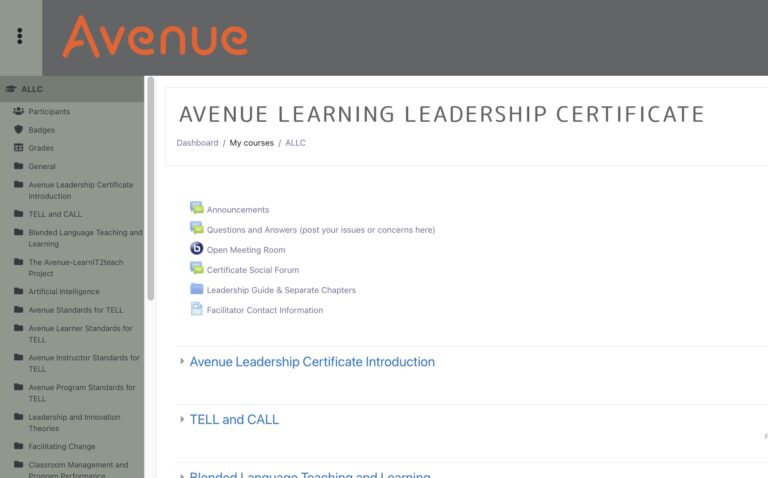
And systems like Avenue provide resources that were unimaginable before.
There are apps, online platforms, and tools like Ron Thomson’s English Accent Coach that help with both perception and production.
And systems like Avenue provide resources that were unimaginable before.
Rob
And what about AI?
Tracey
AI is a game changer. Learners can now have conversations with avatars, which can help build fluency – especially for those who don’t have access to real conversational partners.
And that’s more common than we think. Some newcomers live in environments where they rarely interact with English speakers.
AI can help fill that gap.
And that’s more common than we think. Some newcomers live in environments where they rarely interact with English speakers.
AI can help fill that gap.
Rob
Do you see it replacing teachers?
Tracey
No. Teachers provide motivation, guidance, and human connection. That won’t disappear.
But technology is now essential – it’s part of the teaching toolbox.
But technology is now essential – it’s part of the teaching toolbox.
Rob
Do TESL programs adequately prepare teachers to use technology?
Tracey
Not fully – but I understand why. There’s so much foundational knowledge they need to cover.
Technology changes too quickly for programs to teach it in depth.
What they should do is:
And that’s where most learning about technology actually happens.
Technology changes too quickly for programs to teach it in depth.
What they should do is:
- Make students aware of available tools
- Encourage exploration
- Prepare them to learn on the job
And that’s where most learning about technology actually happens.
Rob
If you could highlight one area that deserves more attention in language teaching, what would it be?
Tracey
Pragmatics – the cultural rules of language.
These are the “secret rules” that no one explicitly teaches. We all recognize when someone says something that is a bit “off” and we attribute that to personality, but often it is because the norms are different in the L2 speaker’s L1.
In Canada, we tend to be quite polite and indirect. Some other cultures are more direct, which can be misinterpreted.
And this isn’t just about social niceties – it affects intelligibility.
If learners use forms that match listener expectations, they’re easier to understand.
These are the “secret rules” that no one explicitly teaches. We all recognize when someone says something that is a bit “off” and we attribute that to personality, but often it is because the norms are different in the L2 speaker’s L1.
In Canada, we tend to be quite polite and indirect. Some other cultures are more direct, which can be misinterpreted.
And this isn’t just about social niceties – it affects intelligibility.
If learners use forms that match listener expectations, they’re easier to understand.
Rob
Any final thoughts for professionals in settlement language training?
Tracey
Two things.
First, teachers play a crucial role – not just in grammar or vocabulary, but in helping learners navigate cultural communication.
Second – and perhaps most important – we need to recognize the value of immigrants.
Investing in newcomers isn’t a burden – it’s an investment in society. The more we support people, the more they contribute.
And the benefits are shared by everyone.
First, teachers play a crucial role – not just in grammar or vocabulary, but in helping learners navigate cultural communication.
Second – and perhaps most important – we need to recognize the value of immigrants.
Investing in newcomers isn’t a burden – it’s an investment in society. The more we support people, the more they contribute.
And the benefits are shared by everyone.
Rob
Tracey, this has been an extraordinary conversation. Thank you.
Tracey
Thank you – it’s been a pleasure.