
Rob
Kerry, to start us off, can you describe your teaching context – who you work with and the level of your learners?
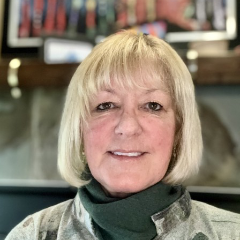
Kerry
Sure. Right now, I teach two different groups. One is a Foundations class with literacy designation – these learners range from early literacy to CLB 1L. The other is a LINC 1-3 class. I’ve been working with CBAL for a year, though I’ve been in ESL since about 2003 – so quite a while now.

Shayna
And to add context, Kerry teaches in one of our community-based in-person classes in Invermere, which meets two hours a week. Like all of our community classes, it’s multi-level by necessity. She also teaches in our LINC Online program, offered four days a week for learners across British Columbia, particularly those in rural communities with no LINC centre.
Rob
What drew you into language teaching? You’ve mentioned you’ve tried to retire before but keep coming back.
Kerry
My early academic interest was actually in law – how language works in law, in rights discourse, and in policy. That took me to Cairo, where I had opportunities to work in human rights, but that work is heavy. Around that time, I met graduate students studying functional linguistics, and I was fascinated. Once I stepped into language teaching, I realized how intellectually engaging and creatively challenging it is. The field keeps evolving, and I’ve never quite been able to walk away from it. New communities, new learner groups – it’s always different. So yes, I’ve tried to retire, but it never sticks.
Rob
In the field, we sometimes hear that Avenue is too complex or too demanding for literacy learners. What’s your take?
Kerry
I just don’t agree. At all. In my experience, Avenue is motivating, adaptable, and accessible if the pedagogy behind it is sound. My literacy-designated learners are largely refugees. They come to class because English is essential for them. When they complete a task on Avenue and see an artifact pop up in The Binder, they feel pride – real pride. And that sense of achievement fuels more learning.
I’ve used different LMSs in the past, and none of them had the same clarity and structure for teaching in a PBLA environment. Avenue gives learners something they can hold onto – it’s concrete, predictable, and emotionally rewarding.
I’ve used different LMSs in the past, and none of them had the same clarity and structure for teaching in a PBLA environment. Avenue gives learners something they can hold onto – it’s concrete, predictable, and emotionally rewarding.
Rob
Shayna, could you paint a picture of your region and why digital learning is so important?
Shayna
CBAL covers an enormous area – 80.000 square kilometers, from the Alberta border, across the East Kootenays, West Kootenays, and the Boundary region. We also serve communities in northern and interior BC through our LINC Online program. Many communities are rural or semi-rural. Some are resort towns where seasonal work brings newcomers for short periods.
People relocate frequently – following employment, housing, or family opportunities. LINC continuity can be really difficult without digital tools.
Avenue helps us provide stability. A learner may start in a town like Fernie, move to Invermere, then to Rossland. Their ePortfolio moves with them. Their online class stays consistent. For literacy learners especially, that continuity is vital.
People relocate frequently – following employment, housing, or family opportunities. LINC continuity can be really difficult without digital tools.
Avenue helps us provide stability. A learner may start in a town like Fernie, move to Invermere, then to Rossland. Their ePortfolio moves with them. Their online class stays consistent. For literacy learners especially, that continuity is vital.
Rob
Kerry, how do your learners respond to technology? Does Avenue help or hinder?
Kerry
At first, it’s intimidating. The unfamiliarity can create anxiety. I’ve used other platforms – EduPage, WhatsApp, Zoom – and learners used them only superficially. But Avenue changed something. Tools that give visibility to learning – like The Binder – spark genuine motivation.
Even when I project things on the board, learners insist on opening the same activity on their phones. They want it in their hands. They want to touch it, repeat it, and revisit it later. Avenue supports that autonomy.
And now that Google Chrome can translate page headings and instructions, even learners who struggle to read in their L1 gain access to meaning.
Even when I project things on the board, learners insist on opening the same activity on their phones. They want it in their hands. They want to touch it, repeat it, and revisit it later. Avenue supports that autonomy.
And now that Google Chrome can translate page headings and instructions, even learners who struggle to read in their L1 gain access to meaning.
Shayna
Kerry brings strong multilingual awareness to her classes. She uses translanguaging all the time – Arabic, Oromo, English.
Kerry
Yes, but even with languages I don’t speak fluently, I approach teaching as a multilingual practice. Literacy learners often need explanations in their first language, especially for grammar concepts or writing. Avenue lets me upload short L1 videos or audio explanations.
If a learner struggles with L1 reading, they can still listen. Listening activates the natural language-processing systems they’ve used all their lives. Repeated exposure builds confidence.
If a learner struggles with L1 reading, they can still listen. Listening activates the natural language-processing systems they’ve used all their lives. Repeated exposure builds confidence.
Kerry
The physical binder can be overwhelming for literacy learners – hundreds of pages, scattered artifacts, and a lack of clear structure. Many of my students rejected it. But Avenue’s digital binder is different. It organizes their artifacts clearly, and learners can see their accomplishments building week by week.
That visual record is incredibly empowering. It becomes a timeline of their journey.
That visual record is incredibly empowering. It becomes a timeline of their journey.
Rob
What’s changed in their confidence?
Kerry
Everything. At the beginning, technology felt like a barrier. But when we moved to Avenue, learners started asking, “Can I show you what I learned?” They started identifying artifacts in relation to their goals – citizenship, employment, community integration.
Fridays became “artifact days” where they reviewed their learning. Avenue makes that possible in a way paper never could.
Fridays became “artifact days” where they reviewed their learning. Avenue makes that possible in a way paper never could.
Rob
How much adaptation do you need to do for literacy learners?
Kerry
Less than you might think. Translanguaging is my main adaptation. The Avenue themes align really well with the CBAL curriculum—weather, community, transportation – which mirrors the National Curriculum Guidelines. I supplement where needed, but Avenue provides a strong backbone.
I also keep course pages extremely clean: simple titles, consistent icons, hidden clutter. Visual simplicity matters.
I also keep course pages extremely clean: simple titles, consistent icons, hidden clutter. Visual simplicity matters.
Rob
Do you rely on your Avenue mentor or the Avenue Knowledge Base?
Kerry
Mostly the tutorials. They’re clear, short, and visual. I search for the most recent version of whatever I need – “Avenue H5P”, “Avenue assignment”, etc. I haven’t needed mentor support yet, though I probably will when I start building more H5Ps.
Rob
What guidance would you offer teachers who want to use Avenue with low-level learners?
Kerry
Three things:
- Know your pedagogy. Literacy learners need carefully scaffolded instruction. Avenue won’t fix weak teaching, but it will amplify strong teaching.
- Have patience – and then more patience. Many literacy learners carry trauma. Many never expected to leave their home countries. Learning English, technology, and Canadian systems at once is huge. Be gentle.
- Begin by “finding out what we don’t know.” My first Avenue class took two and a half hours just to sign in. And we laughed through the whole thing. You need to leave space for discovery.
Shayna
And have patience with yourself. Don’t try to use every Avenue feature at once. Start small, build comfort, and grow from there.
Rob
Any final thoughts?
Kerry
Language teaching feels like riding a wave – new challenges, new curriculum, new technologies. It can be overwhelming, but it’s also invigorating. Technology adds complexity, but it also creates opportunities we didn’t have before. Especially for literacy learners, digital tools can open doors that were permanently closed.
So my advice? Take a deep breath, stay curious, and ride the wave.
So my advice? Take a deep breath, stay curious, and ride the wave.
Shayna
I think Kerry said it perfectly – curiosity and lifelong learning are what make this field such a joy. And honestly, being able to laugh at ourselves along the way makes the journey a lot more fun.